Jackie Kong, Esq.
Hawaii Divorce and Family Law Attorney
Call or click for a consultation
When a child’s care becomes legally necessary due to family changes, emergencies, or safety concerns, two common legal paths in Hawaii come into focus: minor guardianship and child custody. While these terms are often used interchangeably, they are not the same under Hawaii law. Understanding the difference is critical for parents, relatives, and anyone seeking legal responsibility for a minor.
This guide explains the key legal differences between minor guardianship and child custody in Hawaii, including when each applies, who can file, and how long each arrangement lasts.
Minor guardianship is a legal relationship where a court appoints a responsible adult (the guardian) to care for a child when the parents are unable, unavailable, or unfit to do so.
Legal Authority of a Guardian
A minor guardian in Hawaii may:
Guardianship does not automatically terminate parental rights. Parents may still retain certain rights unless the court specifically limits them.
Child custody is usually determined during divorce, legal separation, or paternity cases. It defines which parent (or sometimes a third party) has legal and physical responsibility for the child.
Similar Link: What Parents Need to Know About Physical and Legal Custody in Divorce
Types of Custody in Hawaii
Custody orders are guided by the child’s best interests, focusing on:
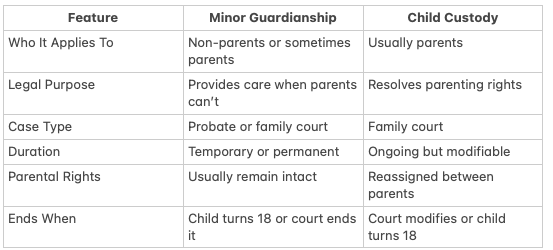
Guardianship is typically used when:
Custody is more appropriate when:
Can Guardianship Turn Into Custody in Hawaii?
Yes, in some cases. If:
Then guardianship arrangements can influence future custody decisions, but one does not automatically become the other.
The legal standard in both cases remains the best interest of the child.
Choosing between guardianship and custody depends on:
Because both options carry serious legal responsibilities, professional legal guidance is strongly advised before filing.
Final Thoughts
Although both arrangements involve caring for a child, legal gaurdnship hawaii and child custody serve very different legal purposes under state law. Legal guardianship provides court-appointed authority and protection for a child when parents are unable to provide proper care, while child custody focuses on defining parental rights and responsibilities during divorce or family law disputes.
Understanding the distinction ensures:
If you are considering either option, consulting a Hawaii family law attorney can help you choose the best path for the child’s future.