Jackie Kong, Esq.
Hawaii Divorce and Family Law Attorney
Call or click for a consultation
A child custody order is a legally binding court order that outlines each parent’s rights and responsibilities regarding their child. It may address legal custody, physical custody, parenting time, visitation schedules, decision-making authority, and other important matters.
When a parent violates a child custody order, the consequences can vary depending on the circumstances and the laws in the state where the order was issued. Missing an occasional exchange due to an emergency may be treated differently from repeatedly denying the other parent court-ordered parenting time.
Understanding what may happen after a custody order violation can help parents protect their rights and, most importantly, support the best interests of their child.
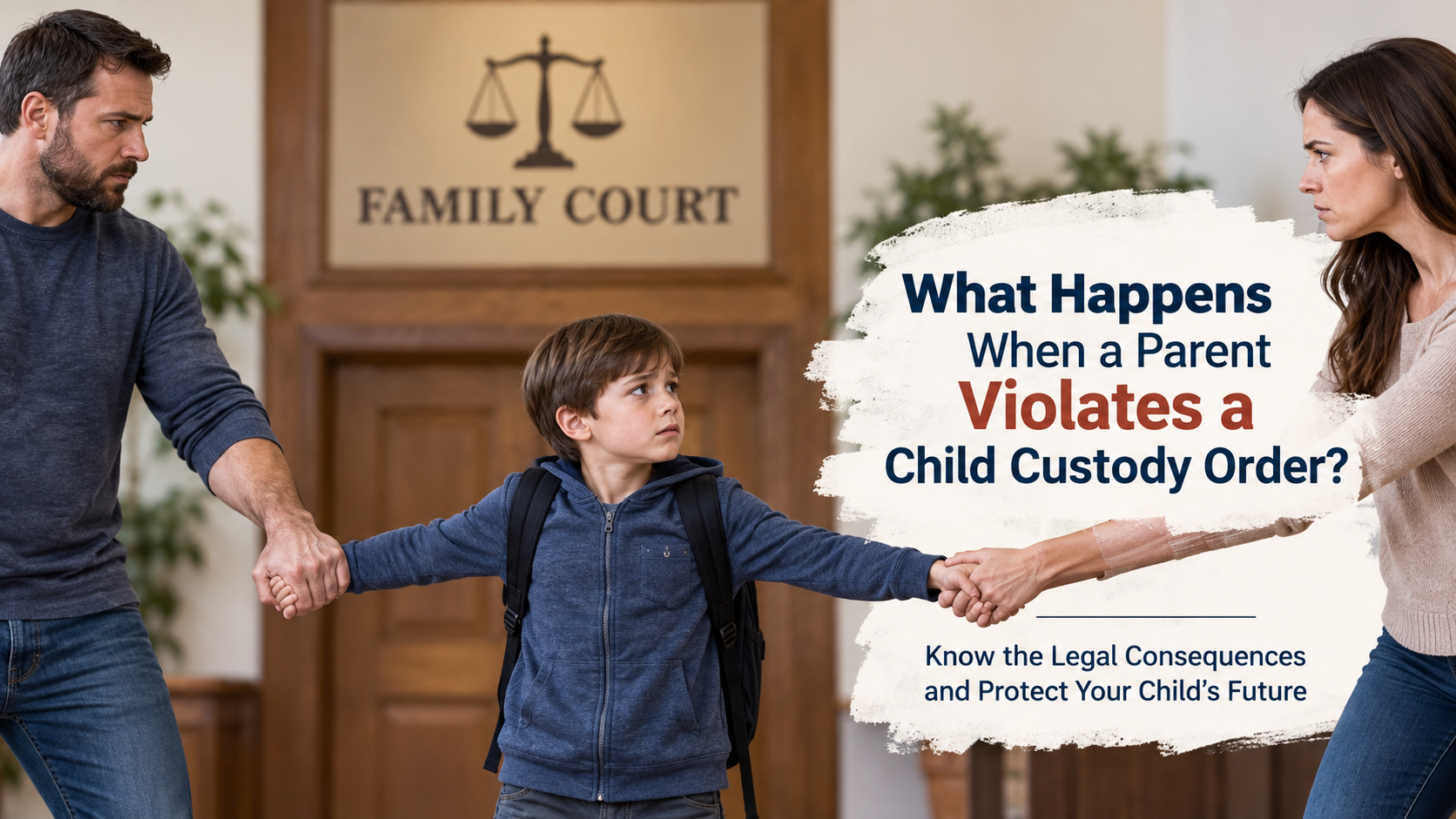
A violation occurs when a parent fails to follow the terms of a valid custody or parenting order without a legally acceptable reason.
Common examples include:
Not every disagreement between parents automatically constitutes a custody order violation. The specific language of the court order and the facts surrounding the situation are important.
If one parent believes the other has violated a custody order, they may be able to seek help from the court. Depending on the situation, the court may review the alleged violation and determine whether further action is appropriate.
Possible consequences can include the following.
A judge may order the violating parent to comply with the existing custody arrangement. This can include following the established parenting schedule and complying with specific exchange or communication requirements.
The court may also clarify the terms of an order if ongoing disputes arise over how it should be followed.
If one parent wrongfully prevented the other from spending court-ordered time with the child, the court may order additional or make-up parenting time.
The purpose may be to restore time that was improperly denied, although the exact remedy depends on the circumstances of the case.
In some cases, a parent who willfully disobeys a court order may face contempt proceedings.
A finding of contempt can lead to consequences determined by the court, which may include fines, attorney’s fees, additional court orders, or other sanctions. The consequences depend on applicable law and the specific facts of the case.
Repeated or serious violations may become relevant when a court considers whether the current custody arrangement remains appropriate.
Depending on the circumstances, the court may modify parenting schedules, exchange arrangements, or other custody-related provisions. Courts generally focus on the child’s best interests when making custody decisions.
A single violation does not necessarily result in a custody modification, but a pattern of noncompliance may be an important factor.
Depending on the jurisdiction and circumstances, the court may order a parent to pay certain costs associated with enforcing the custody order.
This could potentially include attorney’s fees, court costs, or other expenses permitted under applicable law.
Similar link: Questions to Ask Before Hiring a Family Law Attorney in Hawaii
If the other parent is not following a custody order, it is important to respond carefully. Taking matters into your own hands or violating the order yourself could create additional legal problems.
Consider taking the following steps:
Read the order and identify the specific provision that may have been violated. Custody orders can contain detailed requirements regarding parenting schedules, holidays, transportation, communication, and decision-making.
Understanding the exact terms of the order is an important first step.
Keep accurate records of the alleged violation.
Useful documentation may include:
Clear and organized documentation can be important if the matter later needs to be addressed in court.
If it is safe and appropriate to do so, communicate with the other parent in a calm and documented manner.
Avoid threats, harassment, or messages that could escalate the conflict. Written communication can sometimes help establish a record of efforts to resolve the issue.
An experienced family law attorney can help review the custody order, explain available options, and determine whether court action may be appropriate.
Possible legal remedies can vary based on the jurisdiction and the circumstances surrounding the alleged violation.
Generally, one parent’s alleged violation does not automatically give the other parent the right to stop following the custody order.
For example, disputes involving child support and parenting time are often treated as separate legal issues. A parent should not assume they can deny court-ordered parenting time simply because the other parent has failed to meet another obligation.
If there are concerns about the child’s immediate safety, the situation may require urgent legal assistance or contact with appropriate authorities.
A parent who refuses to return a child according to a court-ordered custody schedule may face serious legal consequences.
The appropriate response depends on factors such as the language of the custody order, the length of time involved, the reason for withholding the child, and whether there are concerns about the child’s safety.
In urgent situations, a parent may need to seek immediate legal assistance or contact law enforcement or other appropriate authorities. Parents should avoid taking actions that could place the child or anyone else at risk.
Not necessarily.
Courts typically evaluate the full circumstances of a case rather than automatically changing custody because of one missed exchange or isolated violation. However, repeated, intentional, or serious violations may carry greater weight.
Factors that may be relevant include:
Each case is different, and custody decisions depend on the applicable laws and facts.
The best approach is to understand and follow the custody order carefully.
Parents can reduce conflicts by:
If a custody arrangement no longer works because of relocation, work changes, or other significant circumstances, it may be necessary to request a modification rather than simply ignoring the existing order.
Similar link: Minor Guardianship vs. Child Custody in Hawaii: What’s the Legal Difference?
You may want to speak with a family law attorney if:
A lawyer can provide guidance based on the laws that apply to your specific situation.
Frequently Asked Questions
Is violating a child custody order illegal?
A custody order is legally binding, and intentionally failing to comply with it can result in legal consequences. Depending on the circumstances and jurisdiction, enforcement actions or contempt proceedings may be possible.
Can police enforce a child custody order?
Law enforcement involvement can depend on the jurisdiction, the wording of the custody order, and the specific circumstances. In some situations, the issue may need to be resolved through family court, while emergencies or certain serious situations may require immediate law enforcement involvement.
Can a parent lose custody for violating a court order?
It is possible for repeated or serious violations to affect future custody decisions, but a custody change is not automatic. Courts generally consider the child’s best interests and the full circumstances of the case.
What evidence can help prove a custody order violation?
Relevant evidence may include the custody order itself, messages, emails, parenting calendars, records of missed exchanges, witness information, and other documentation showing what occurred.
Violating a child custody order can create serious legal and emotional consequences for both parents and children. Courts may enforce the existing order, award make-up parenting time, impose sanctions, or consider the parent’s conduct in future custody proceedings, depending on the circumstances.
If you believe a custody order has been violated, carefully document the situation, continue following your own legal obligations whenever possible, and consider speaking with a qualified family law attorney Honolulu Hawaii residents can turn to for guidance. Because child custody laws and enforcement procedures vary by jurisdiction, obtaining advice specific to your situation is often the best way to understand your available options.